
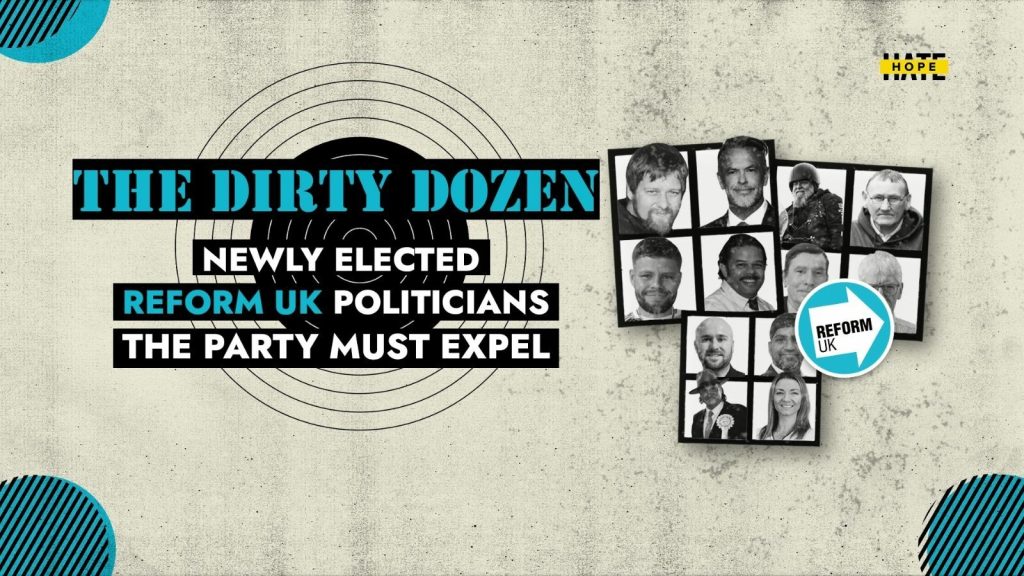
Reform candidates suspended after HOPE not hate uncovers racist and extremist rhetoric
In the run up to the UK’s recent local council elections, HOPE not Hate published multiple investigations that uncovered racist, antisemitic, Islamophobic and extremist remarks made by Reform UK individuals standing in the elections. The reporting prompted suspensions, resignations and growing public debate about vetting standards within the party.
Among the most prominent cases was Glenn Gibbins, a Reform candidate elected in Sunderland’s Hylton Castle ward. HOPE not Hate revealed that Gibbins had posted racist comments about Nigerians in Sunderland, including violently explicit suggestions for how the authorities should treat them. He was also accused of making misogynistic and homophobic remarks online. Following the reporting and mounting media scrutiny, Reform suspended Gibbins pending investigation.
In Sheffield, HOPE not Hate identified newly elected Reform councillor Nathaniel Menday as having allegedly promoted white supremacist and neo-Nazi views online. According to reports, Menday described himself as an “ethno-nationalist”, encouraged the use of white supremacist symbols and shared comments blaming Jewish people for antisemitism. He also reportedly praised Berlin’s Nazi-era Olympiastadion, writing that those who built it were “real visionaries”.
HOPE not Hate also investigated Plymouth candidate Ben Rowe, who was later suspended by Reform. The organisation reported that Rowe had posted antisemitic conspiracy theories online, accused Jewish people of “creating division”, shared racist memes and used dehumanising language about immigrants. During unrest following the 2024 Southport riots, Rowe allegedly encouraged protesters gathered outside a mosque to “get rid of that filthy building”.
In Bradford, the group exposed comments attributed to Reform candidate Daniel Devaney, who allegedly wrote explicitly violent rhetoric about what he wanted to do to Muslims, as well as using dehumanising language to describe them. Although Devaney later apologised and reportedly stood down, the revelations intensified concerns about extremist rhetoric among candidates standing for elected office.
It was reported that in total over 30 Reform UK candidates who were elected are facing allegations of wrongdoing, hypocrisy, and sharing hateful social media material.
HOPE not Hate has long monitored far-right and anti-democratic movements in the UK. The organisation has demonstrated that that rigorous public scrutiny remains essential as extremist narratives increasingly intersect with mainstream political discourse and warns that failures to challenge such rhetoric risk further normalising racism, antisemitism and disinformation in public life. The role of independent media and researchers in holding people in public office to account and challenging hate has rarely been more important.
Return to grantee stories