
SRT Newsletter – August 2026
Grantee News:
Media Defence has welcomed a Zimbabwe High Court ruling quashing criminal charges against Zimbabwe Independent editor Faith Zaba, whose legal defence it supported. The court’s recognition of satirical political commentary as protected expression marks an important victory for press freedom, although Media Defence warns that laws criminalising criticism of public officials remain in place.
HOPE not Hate has found that algorithms on X amplified racist abuse directed at England players during the 2026 FIFA World Cup, after analysing more than 300,000 posts and identifying over 5,500 explicitly racist messages. The organisation is calling on Ofcom to use its Online Safety Act powers to require stronger safeguards during major sporting events and curb the algorithmic promotion of hate.
ClientEarth has continued its legal campaign against PFAS (“forever chemicals”), supporting cases against chemical companies Arkema France and Daikin Chemical France over alleged pollution in France, and challenging Belgium’s response to widespread PFAS contamination. The organisation also advised lawyers in the landmark Italian Miteni case, which resulted in prison sentences for 11 former chemical executives. Profiled by The Guardian, lawyer Hélène Duguy said the organisation’s goal is not only to secure compensation for affected communities, but to drive stronger regulation and accountability.
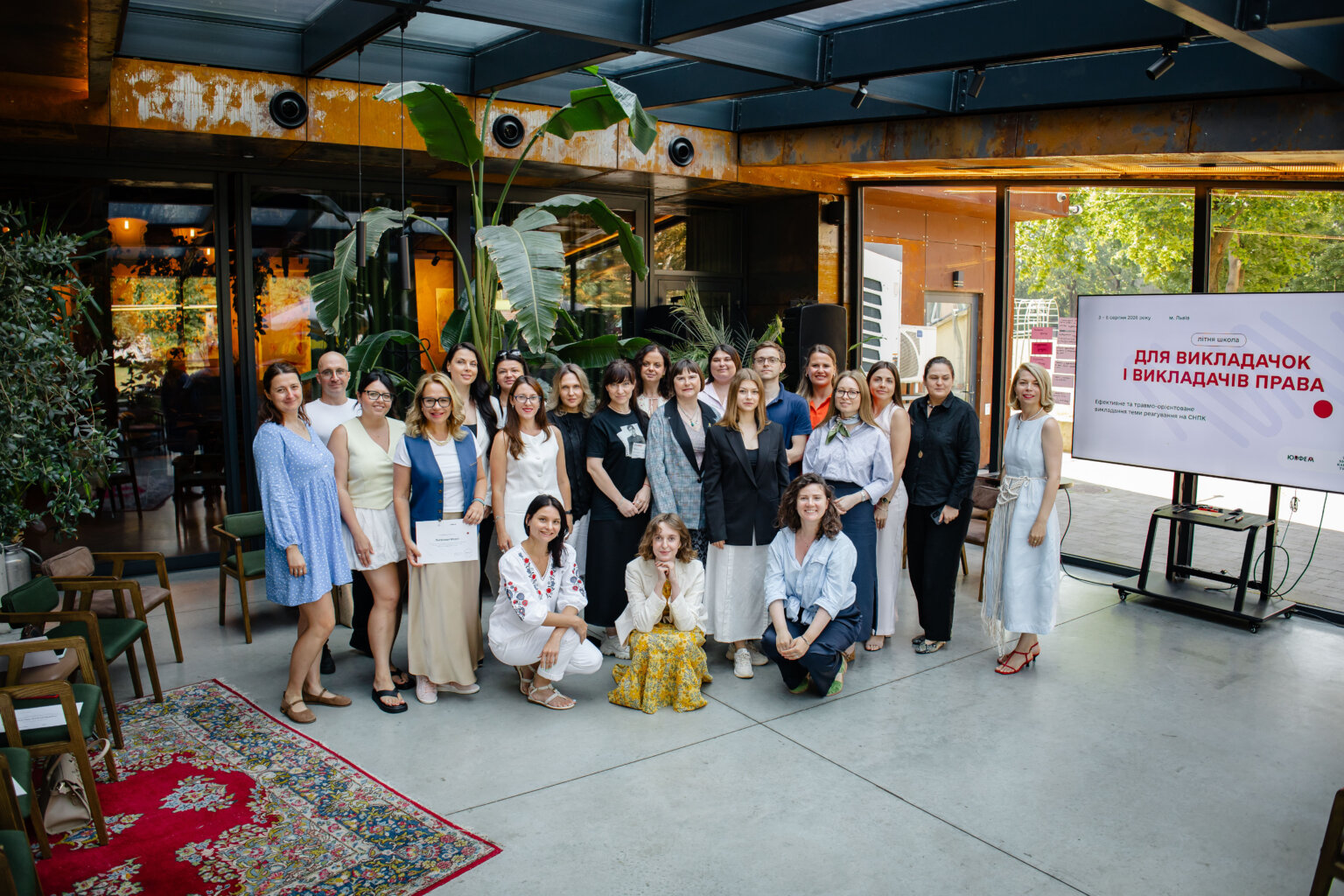
The Ukrainian Women Lawyers Association JurFem has held its first Summer School for university law lecturers, bringing together academics from across Ukraine to strengthen gender-sensitive legal education. The programme equipped participants with practical tools to integrate women’s rights, gender equality, and survivor-centred approaches into legal teaching, helping to embed these principles in the next generation of legal education.
A major new study, commissioned by Pesticide Action Network, (of which SRT grantee Pesticide Action Network Europe is a part of), has found that almost half of the world’s farmers experience acute pesticide poisoning every year, with an estimated 402–433 million cases and around 11,000 deaths annually. The findings have prompted renewed calls to phase out highly hazardous pesticides and strengthen protections for farm workers.
ChemSec has helped raise awareness of the growing global threat posed by PFAS (“forever chemicals”), publishing expert analysis that compares the scale of the crisis to ozone depletion and highlights the urgent need to phase out PFAS at source. The article comes as the EU considers a broad restriction on PFAS, reinforcing ChemSec’s long-standing advocacy for stronger regulation.
The Bulgarian Society for the Protection of Birds (BirdLife Bulgaria) has fitted GPS transmitters to the first Cinereous Vulture chicks to hatch in Bulgaria’s Eastern Rhodopes for more than 30 years. The successful breeding marks a major milestone in the reintroduction of one of Europe’s rarest birds, with tracking data helping guide future conservation efforts.
Finally, a series of new documentaries has brought greater public attention to environmental health issues championed by SRT grantees. Buried with Michael Sheen examines historic PCB (man-made chemicals called polychlorinated biphenyls) pollution in Wales, while SRT grantee Watershed has been mapping these historic toxic waste sites across England and Wales. Infertile explores the impact of endocrine-disrupting chemicals, an issue on which CHEM Trust helped secure recognition of endocrine disruptors as a distinct hazardous class in Europe, and alongside HEAL, continues to advocate for stronger regulation. Meanwhile, Netflix’s The Plastic Detox highlights the health effects of plastics, with HEAL serving as a formal partner in the film’s impact campaign.
Return to grantee stories