
SRT Newsletter – February
Grantee news
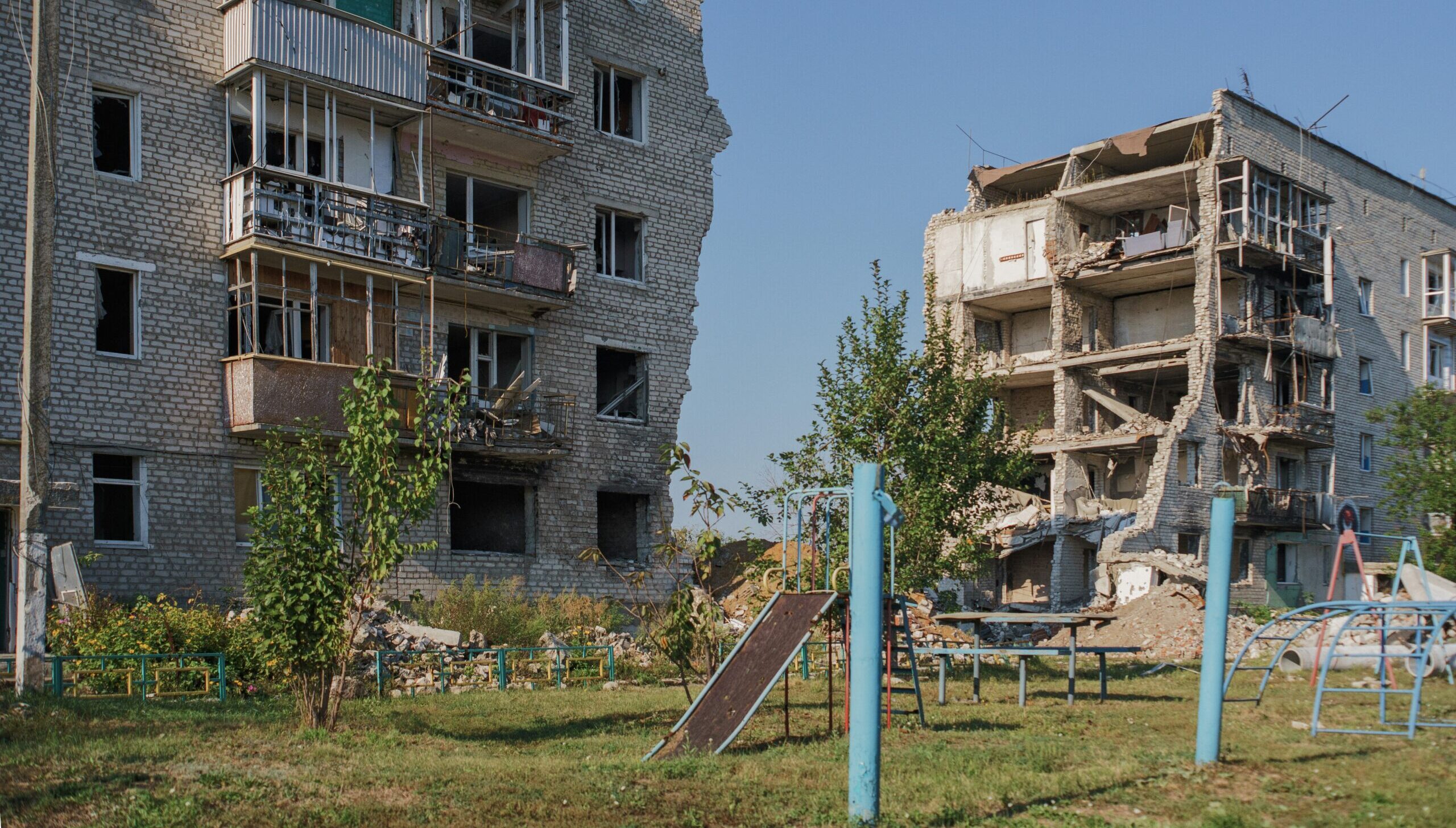
Bellingcat has published an investigation documenting how Russia’s war has devastated civilian life in Ukraine, verifying over 2,500 cases of civilian harm, including strikes on homes, schools, hospitals, and other civilian infrastructure across multiple regions. The analysis, accompanied by an interactive map, underscores the widespread human cost of the conflict and the systematic impact of Russian strikes on communities throughout the country.
Transparency International has revealed that Russian firms have routed about $8 billion of trade through British Overseas Territories such as the British Virgin Islands, Bermuda, the Cayman Islands and Gibraltar since Russia’s full-scale invasion of Ukraine, including luxury yachts, oil-drilling equipment, and aircraft. It raises concerns about gaps in sanctions enforcement and transparency in these jurisdictions.
Truth Hounds’ upcoming investigation, “I Was Tricked into the War,”reveals how Bangladeshi men were allegedly lured abroad with promises of civilian jobs, then routed to Russia and pressured into signing contracts before being deployed to fight in Ukraine. Based on interviews with survivors, families and other sources, the report frames these cases as risks of human trafficking and coerced recruitment linked to Russia’s war effort.
Protection Approaches has welcomed a joint announcement by the UK, Germany, Norway, Ireland and the Netherlands to establish a coalition to prevent further atrocities in Sudan and support pathways to justice. Having long called for such a mechanism, the organisation said the move marks an important step forward and credited rapid support funding with enabling the sustained high-level engagement that helped secure it.
The International Center for Not-for-Profit Law (ICNL) has warned that draft constitutional amendments in Kazakhstan would entrench stricter foreign funding disclosure requirements for non-commercial organisations. Civil society groups say embedding these rules at constitutional level risks further restricting access to resources and shrinking civic space.
The European Centre for Not-for-Profit Law (ECNL) has highlighted the financial barriers faced by human rights defenders in exile in the EU, with many unable to open bank accounts or securely access funds. The paper sets out targeted recommendations for the EU, national governments, and financial institutions to improve banking inclusion so that defenders can sustain their work and daily lives while seeking safety.
The European Network on Statelessness’ annual State of Play assessment highlights slow but important progress in some European countries on reducing statelessness, including new legal safeguards in a handful of states. However, the report also flags setbacks and ongoing gaps in birth registration, nationality laws, and protection for stateless people.
Transparency International’s latest Corruption Perceptions Index showed both the UK and US sliding to their lowest ever positions in the global rankings of perceived public-sector corruption. The annual report, which assesses 182 countries, cited factors such as political donations, weakening checks on power and pressure on civil society and media.
Safe Passage is taking the UK Home Office to the High Court to challenge its decision to halt refugee family reunion processing, arguing the policy unlawfully blocks refugees from uniting with their loved ones. The action, brought on the UK Anti-SLAPP Coalition’s 5th anniversary, has drawn significant attention as a test case for asylum and family unity rights in UK law.
Foreign Policy Centre coordinated a joint letter to Keir Starmer calling for comprehensive anti-SLAPP protections to be included in the King’s Speech, securing 127 signatories from across media, law, academia, and civil society – double previous efforts. The initiative generated significant media coverage and prompted a second wave of signatories, alongside plans for a forthcoming parliamentary debate on SLAPPs.
Media Defence has secured a major press freedom victory after the European Court of Human Rights ruled that Azerbaijan’s prosecution of investigative journalist Khadija Ismayilova was unlawful and violated multiple rights under the European Convention. The judgment highlights the misuse of criminal charges to silence independent journalism and reinforces protections for free expression across Europe.
Direkt36’s newest ambitious documentary, The Trap, surpassed one million views within four days, making it one of the most widely seen journalistic works in Hungary. The film examines how Viktor Orbán’s governments used, or squandered, 16 years of historic economic opportunity and EU support across key sectors including healthcare, education and public transport.
Six investigations by Arab Reporters for Investigative Journalism (ARIJ), along with a cross-border collaboration from the Gaza Project, have been shortlisted for the 2026 True Story Award, which recognises excellence in investigative journalism worldwide. The Gaza Project is a collaborative reporting initiative to investigate issues linked to the war in Gaza.
Panoptykon, which has long advocated for stronger digital rights protections in Poland, has criticised the president’s veto of legislation implementing the EU’s Digital Services Act – a law designed to protect online users and increase platform accountability. The veto delays national enforcement of the DSA and the appointment of a Digital Services Coordinator, slowing safeguards for users against harmful and illegal content online.
After a Bureau of Investigative Journalism report exposed a loophole allowing large cattle megafarms to operate without environmental permits, the government is now considering tougher rules to bring beef and dairy units under the same regulatory regime already applied to intensive pig and poultry units. The proposed changes aim to curb pollution from intensive livestock farming.
The Bird Protection and Study Society of Serbia (BPSSS) played a key role in the recovery of the eastern imperial eagle, supporting monitoring, nest protection and habitat conservation efforts that have helped the species rebound from just one breeding pair in the late 2010s to a growing population today. While numbers remain fragile, conservationists say the eagle’s return marks a significant success for long-term protection work.
UCL Neurogenetics reported at this year’s Alzheimer’s Research conference significant progress in Alzheimer’s research, including treating the first patient in a major international trial of a new gene-targeting therapy. Researchers are also developing less invasive ways to deliver genetic treatments, potentially replacing spinal injections with simple intravenous methods.
Return to grantee stories